A third brand, in one shot: The Website Specification
The studio, pointed at another live product — specification.website, an open-source spec of what a good website does. A light, technical brand this time. We adopted its palette, generated a spec-check leader, drove its real pages, and shipped an English walkthrough in 16:9 and 9:16 — for about $0.61.
✓ Produced in a single pass — no concept round, no reworks"What a good website does" — 30s, 16:9. Generated spec-check leader · real pages · one type system · light-theme grade with white dissolves. Same bar, a very different brand from the last case.
Adopt the brand — a light, technical one
We read the live site's own tokens: a near-white paper, near-black ink, one emerald-green accent, and a clean system-sans. The film's titles are set to match — heavy, precise, on a light ground. Where the last case was dark and elemental, this one is bright and exact. The studio adopts whatever the brand already is.
A spec, checking itself
The brand mark is a green checkmark. So the leader is a page wireframe with green check-strokes converging into that mark — the spec's items, validated. One keyframe (nano-banana), checked, then animated (image-to-video) and reversed for the outro. Prove the signature once; scale it for free.
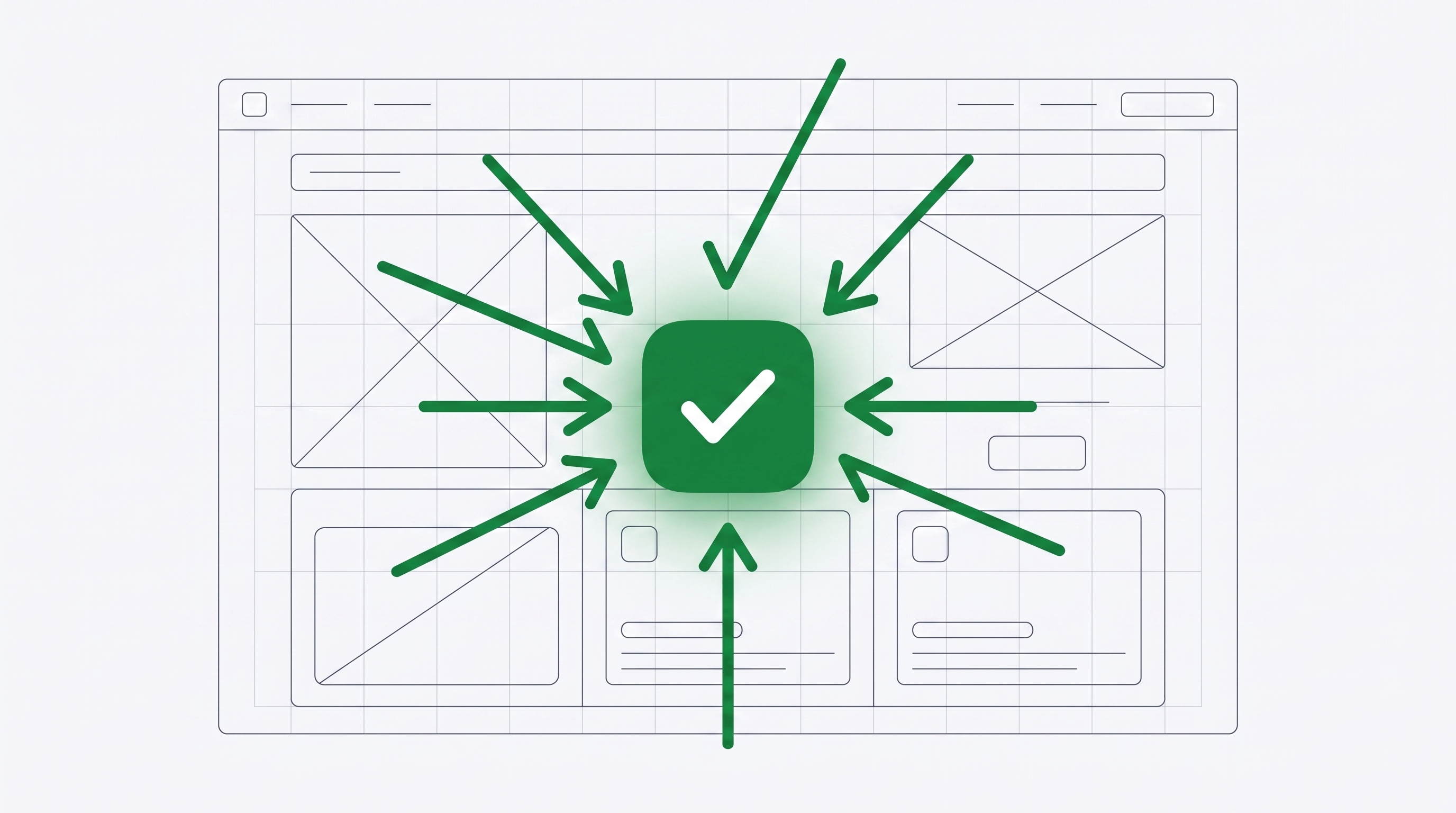
We drove the real spec
The screens are the live site — home, the topic index, the checklist, and the MCP page — captured deterministically with the same reusable rig. The vertical scrolls through the actual spec: the checkboxes, the "Required" badges, the MCP tools. Capturing real pages is free, and it is why this stays cheap.

The spec
160 topics across ten areas — from <title> to security.txt.
The checklist
Every item a yes/no you can audit your own site against.
The MCP server
"For humans and agents" — the spec, queryable by an agent.
Both ratios from one build — for $0 more
The 9:16 reuses every paid asset: the leader is reframed, the pages are re-captured natively on mobile and scroll through real content, the titles re-flow. No new generation — the vertical is free to produce.
The vertical scrolls down each real page — the spec items with their checkboxes and "Required" badges, the MCP tool list — not a stretched desktop grab.
What it cost — and when it costs more
The same headline as always: the money is in AI generation — mainly image-to-video — not the edit. Captures, stills, montage and re-runs are free.
| Item | How | Cost |
|---|---|---|
| Leader keyframe | nano-banana Pro, 2K | $0.16 |
| Leader motion (→ reversed for the outro) | fal Veo-3-Fast, 1080p, 4s | ~$0.40 |
| Outro | reversed leader (ffmpeg) | $0 |
| 4 real pages | Playwright capture rig | $0 |
| Audio bed | fal stable-audio | ~$0.05 |
| Montage + grade (16:9 and 9:16) | ffmpeg + ImageMagick | $0 |
| Total | one paid bracket + one bed; the rest free | ≈ $0.61 |
It costs more when…
- more image-to-video shots × more seconds × higher resolution
- higher-tier models (Pro, Veo-3, 4K) where a cheaper tier would do
- fanning out to N languages/ratios that each generate instead of reusing one master
- iterating without a PoC — regenerating a look you never validated
- the film is fully-AI: many generated shots instead of captured ones
It costs less when…
- you lean on real captures ($0) — like this walkthrough
- a still with ffmpeg motion replaces an i2v shot
- the leader/outro bracket is built once and reused
- you validate one PoC before fanning out
- the audio is a generated bed and re-runs stay free
Dark or light, any brand
Two cases, two opposite looks — an elemental dark SaaS and a bright technical spec — from one studio, each adopted from the brand as it already is, each for under a euro of generation.