Escape Something.
A game without words.
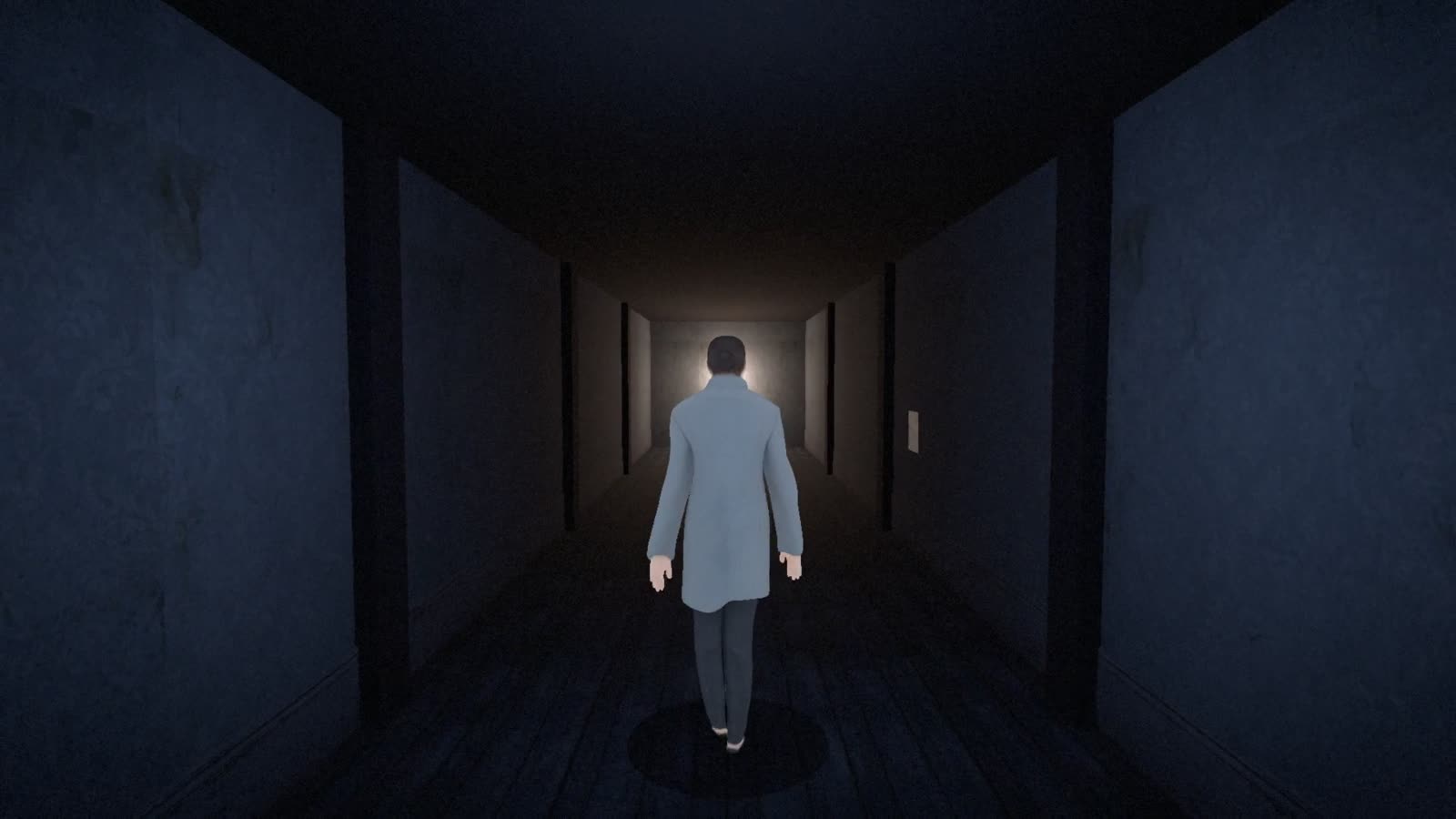
You run through rooms that don't connect. Looking back gives you a piece of the story — and lets whatever is following you come closer. No text, no explanation, no menu bar. Just space, light and sound.
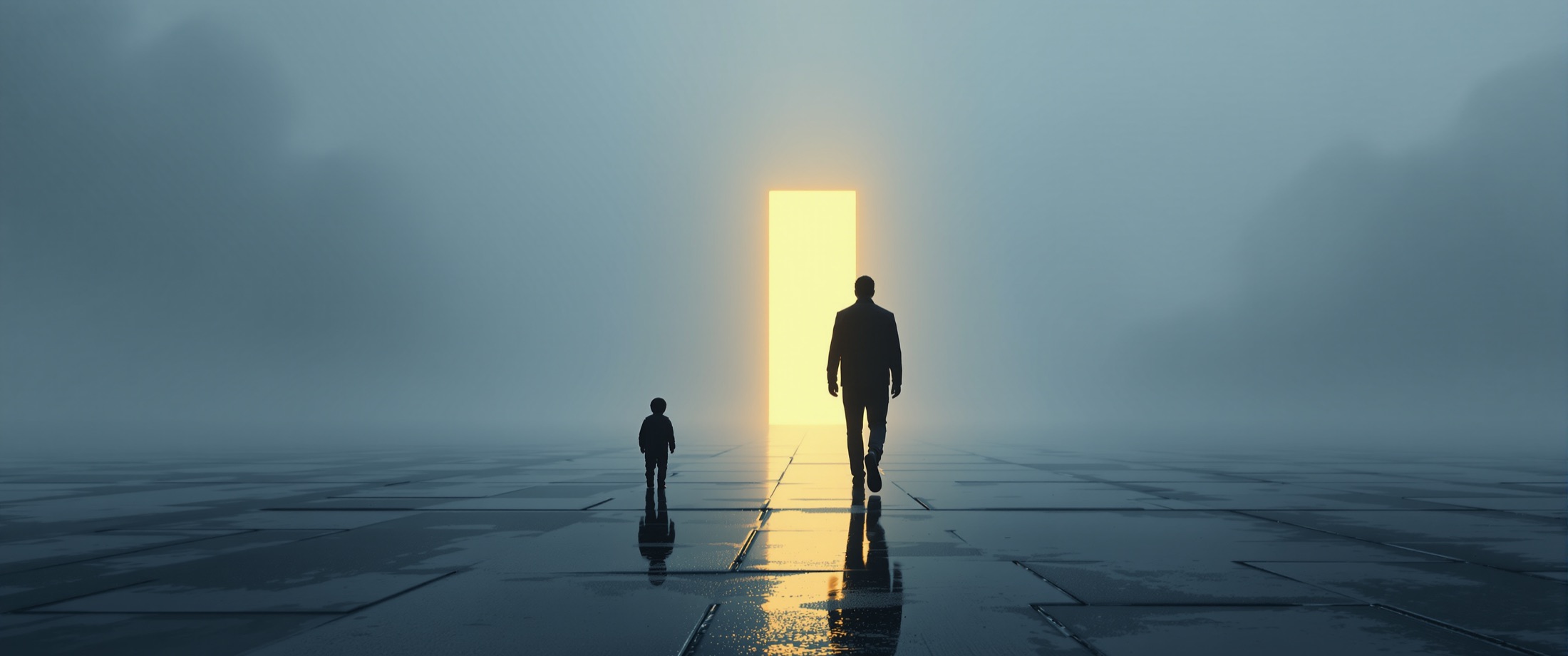
One choice, over and over.
The whole game turns on a decision you keep making. Do you want to understand what is walking behind you, or do you want to keep your distance? You can't have both.
Looking back costs you distance
It waits when you wait
Everything is in the space
My daughter chooses.
I build what she chooses.
I make Escape Something together with my daughter. She makes the creative decisions. Not symbolically — really. What shape a room takes, whether the wallpaper glows or stays cold, whether the door has a handle, what changes the moment you look back: those are her choices.
For that I built a choice tool of my own. She gets a series of questions with two sides, picks one, and her choices go straight into the next build round. What she chooses today is in the game next time. That makes the game something that talks back: her decisions become visible, and that visibility is exactly what makes the practice worth it.
Along the way, the tool turned out to matter more than the game around it. The moment of choosing is small enough to take in, the result is big enough to recognise, and there is no right or wrong. It is play and rehabilitation at the same time, without feeling like an exercise.
Everything else there is to tell — who she is, how it's going, which choices she made — is on the project site itself. She tells that story there in her own words, and that is where it belongs.
Every step is online.
The game is developed in public: the choices, the art, the sound, the wrong turns and the fixes. The dev log comes out as it happens, including the things that went wrong — because that is usually where the lesson is. The prologue simply runs in your browser: three rooms, no words, best with the sound on.
What it runs on.
Built in TypeScript with Phaser and Vite, packaged for iPad with Capacitor. The sound is spatial: you hear where it is, not just that it's there. Every build round goes through type checking, unit tests and a set of scene tests before anything goes live — the same pipeline I use for client work, because a game that freezes is just as much a production failure.
Development follows the same pattern as the rest of my work: Claude writes the code, I decide what gets built and review every change. That is also why a project like this fits alongside the care I give — I build in the hours there are, and the system remembers where we left off.
Three rooms.
No words.
The prologue runs in your browser — best with the sound on and the lights off. After that you'll know if this is for you. Want something like this built, or curious how it works? Let me know.